What STREETS can do.
Six integrated modules covering every part of real estate portfolio management, from data ingestion to stakeholder reporting.
Your data, validated from the moment it arrives.
Built on an open data model aligned to your chart of accounts and legal structure. Automated controls flag inconsistencies at upload. Key validations and approvals are fully traceable — and the structured, validated data model is ready for AI tools when your team adopts them.
- Structured model aligned to your COA and entities
- Automated validations and exception lists at data load
- Traceability of key accounting and budgeting workflows
- Fast exports to your ERP and reporting packs
- Structured data model ready for future AI use cases
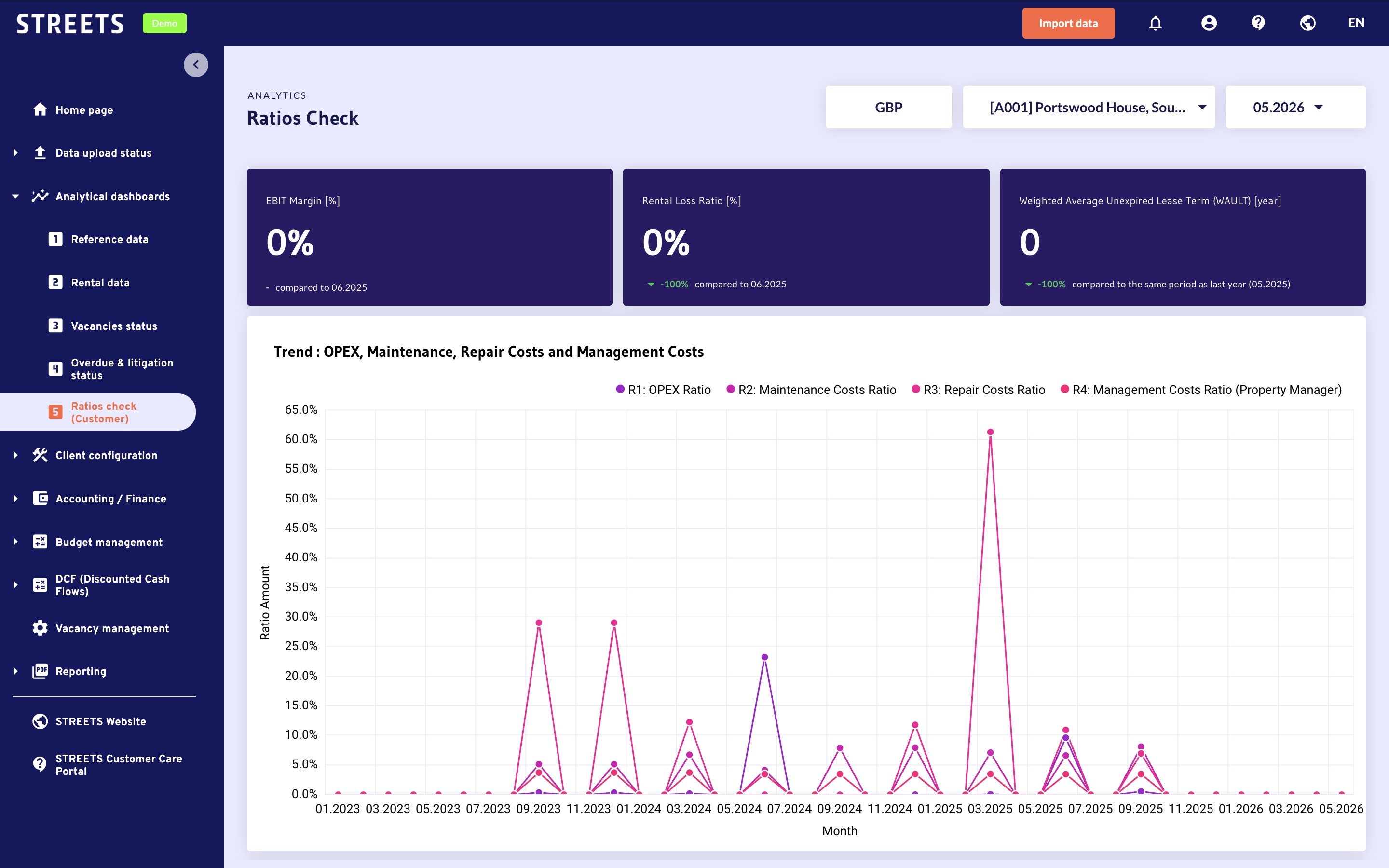
Current insights from portfolio to unit.
Navigate from portfolio overview down to individual units. Export to Excel or share reporting packs with committees. Every KPI reflects the latest validated submission.
- Gross yield, net yield, LTV, occupancy, WALT, average rent
- Monthly net rent, rental loss, market value, total overdue rents
- Budget vs actuals with variance analysis
- Lease events and arrears tracking
- Custom views by sector, geography or strategy
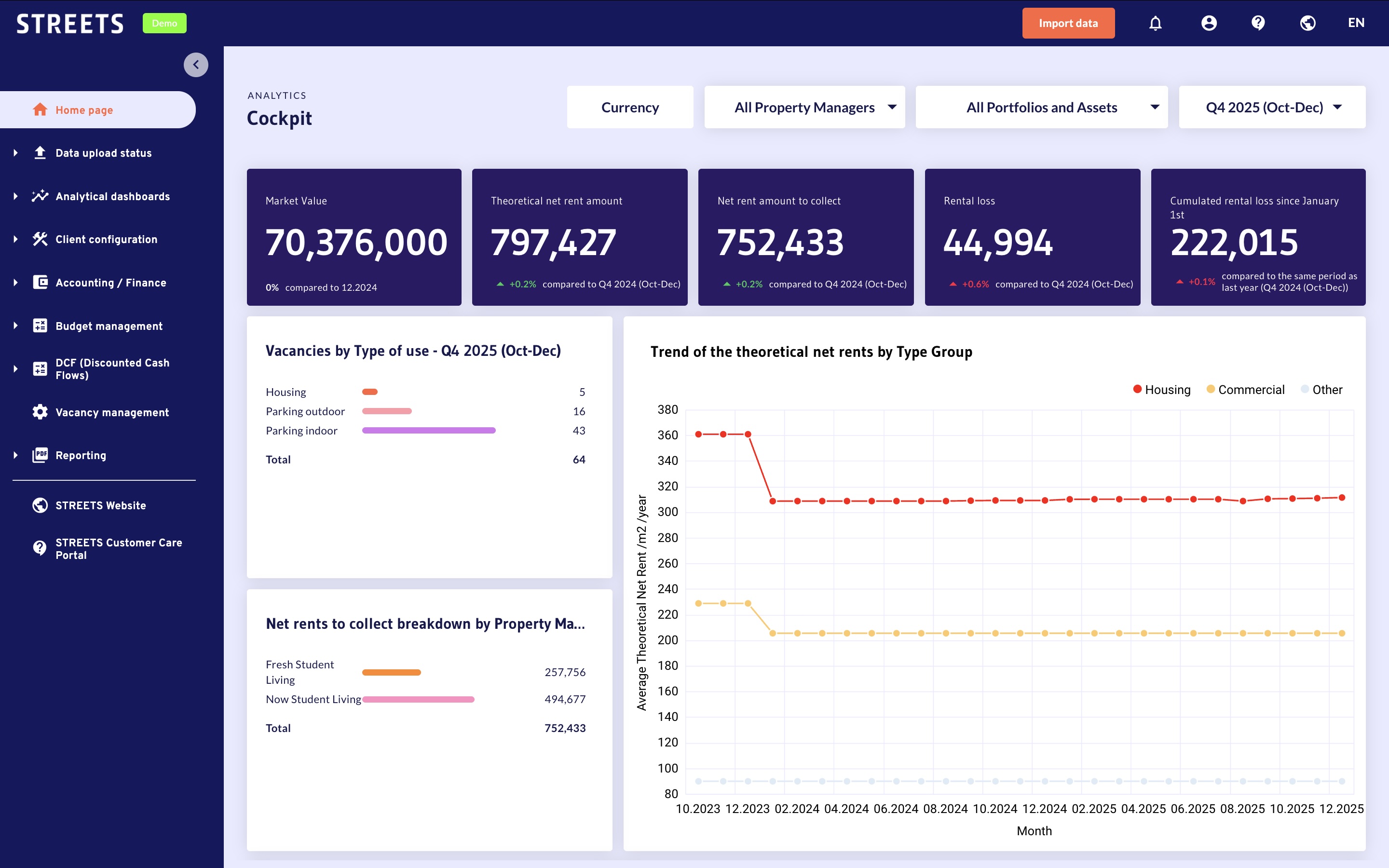
The control layer between property managers and asset managers.
At the heart of STREETS is a standardised Ratio Check dashboard — used by asset managers to review and validate financial data submitted by property managers before it enters the reporting chain.
Each submission cycle, asset managers step through a set of control ratios covering OpEx, WAULT, EBIT margin, insurance, administrative costs, balance sheet consistency and yield metrics. Anomalies are flagged for review before data is approved — reducing errors and shortening the quarterly close cycle significantly.
- OpEx and cost ratios (R1–R5), WAULT (R6), EBIT margin (R7)
- Balance sheet and accounting consistency checks (C1–C7)
- Gross and net yield, VAT control, profit consistency
- Full approval workflow — nothing passes until the asset manager signs off
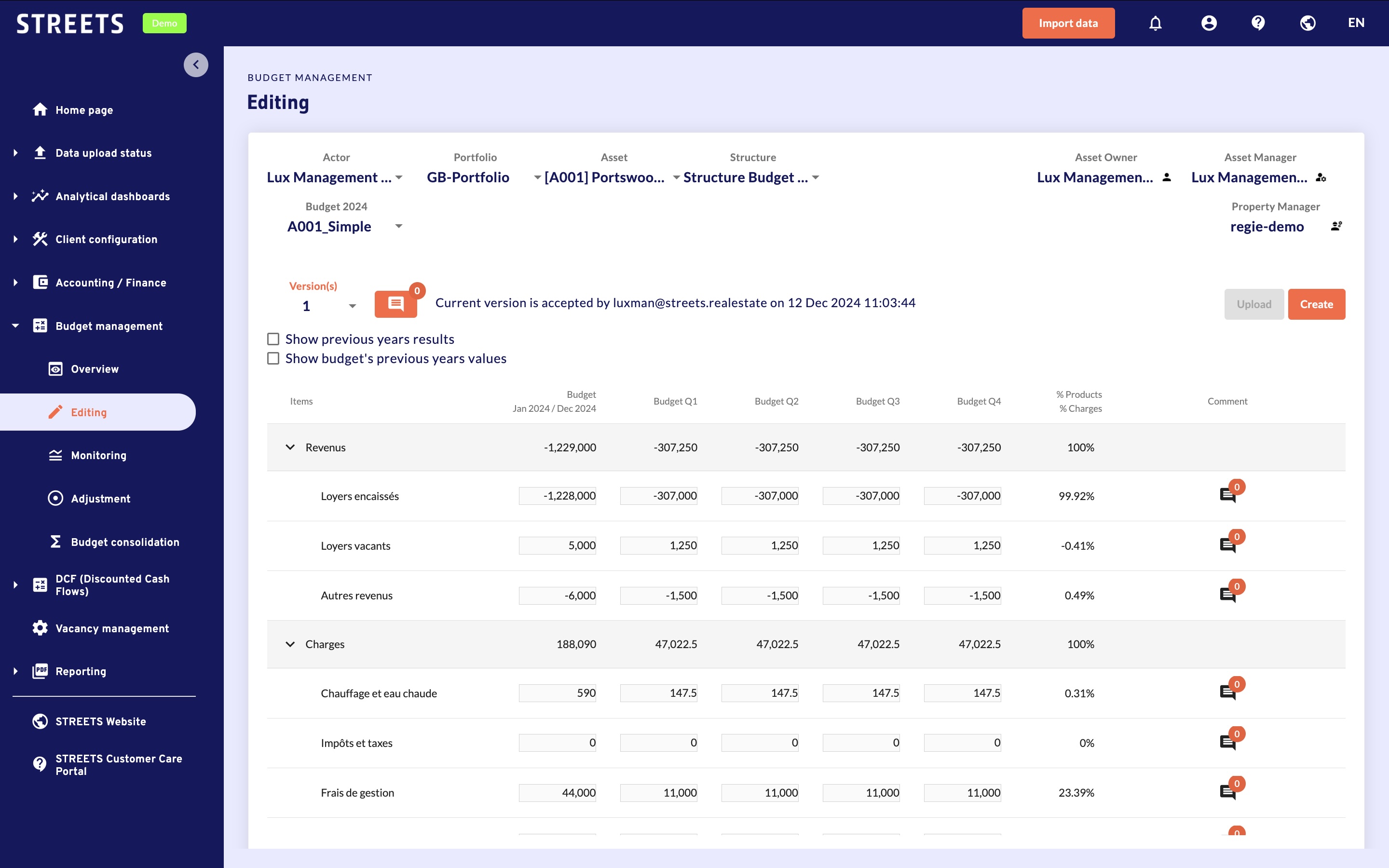
Forecast, track and reforecast with confidence.
Forecast budgets, adjust scenarios and track spend. Compare plan to actuals and reforecast within tolerance bands. Every change is versioned and approved.
- Versioning, approvals and full traceability
- Distribute budgets monthly or quarterly
- Tolerance rules with colour thresholds
- Cash flow view linked to lease and OpEx events
Data only flows through when your team says it's ready.
Reconcile imported entries to your chart of accounts. Validate journals before ERP export. Reduce closing effort significantly. Nothing reaches your accounting system without approval.
- Maps multiple property manager accounting structures
- Buffer-zone validation before ERP push
- Full audit trail of all validation steps
- Interfaces directly with ERPs
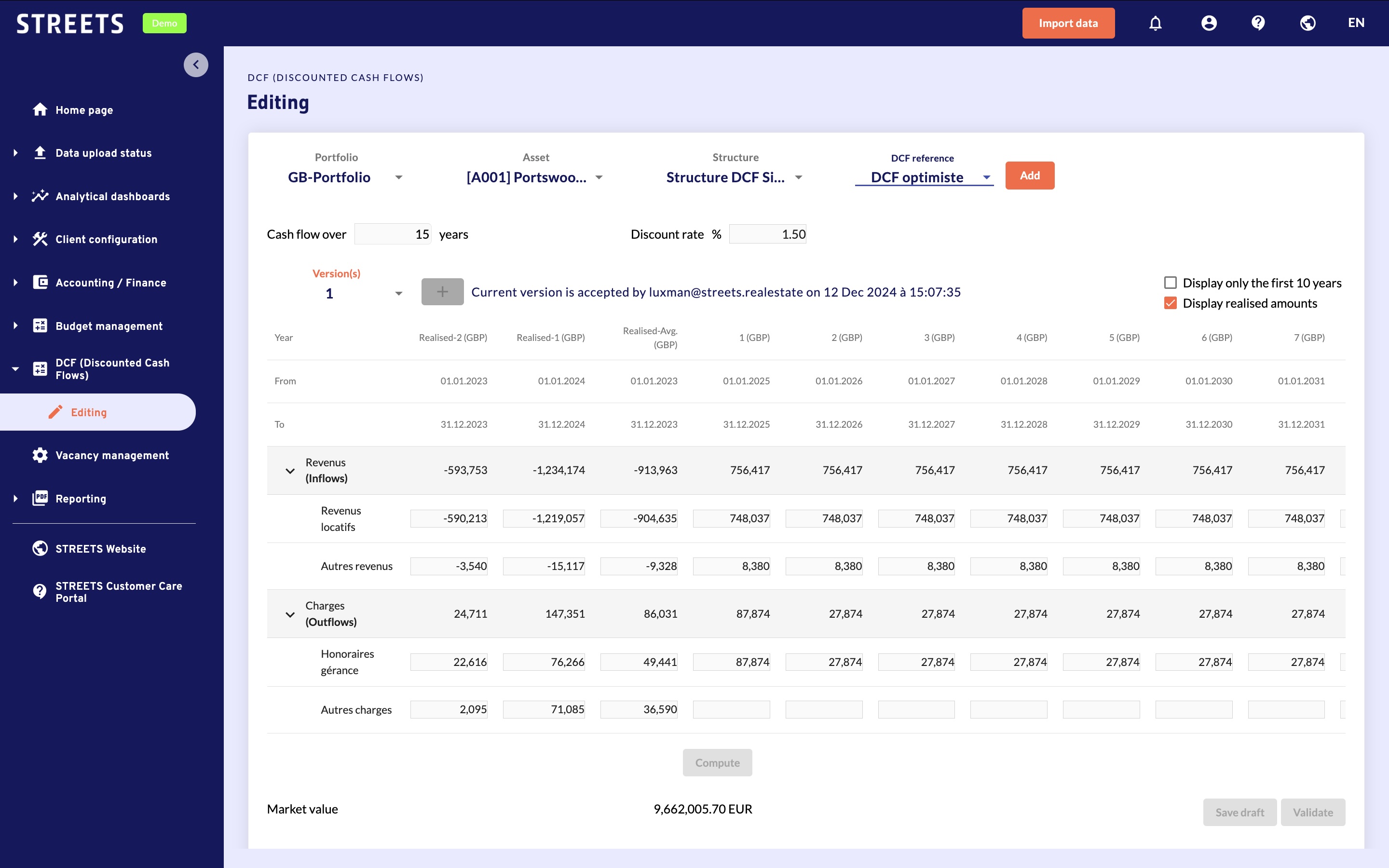
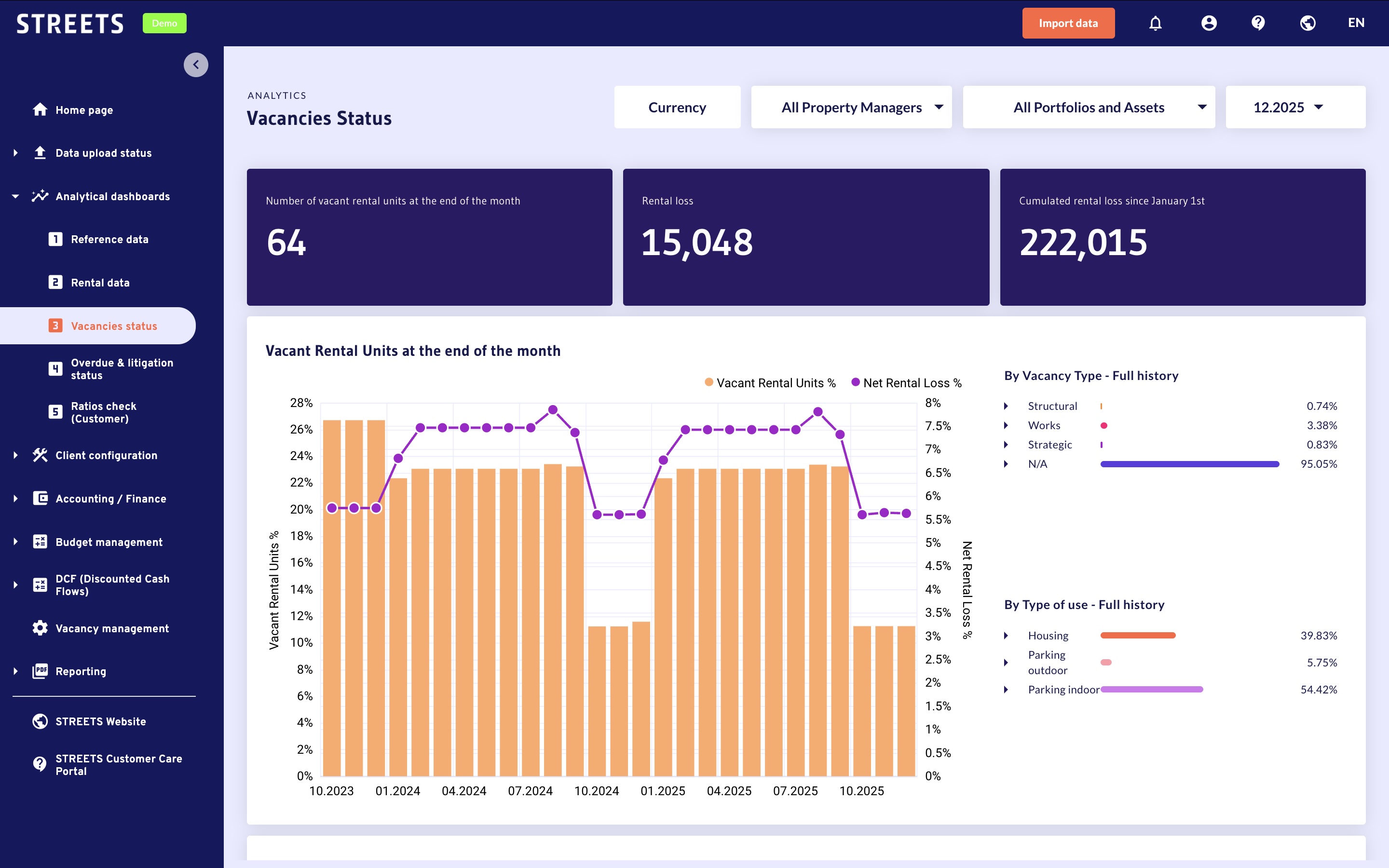
Anticipate rental loss before it hits your bottom line.
Classify, analyse and reduce vacancies across assets. Track lease events and anticipate rental loss before it happens. Portfolio and asset-level vacancy dashboards.
- Vacancy classification and status tracking
- Lease expiry timeline and pipeline view
- Rental loss calculation and reporting
- Asset and portfolio level vacancy dashboards
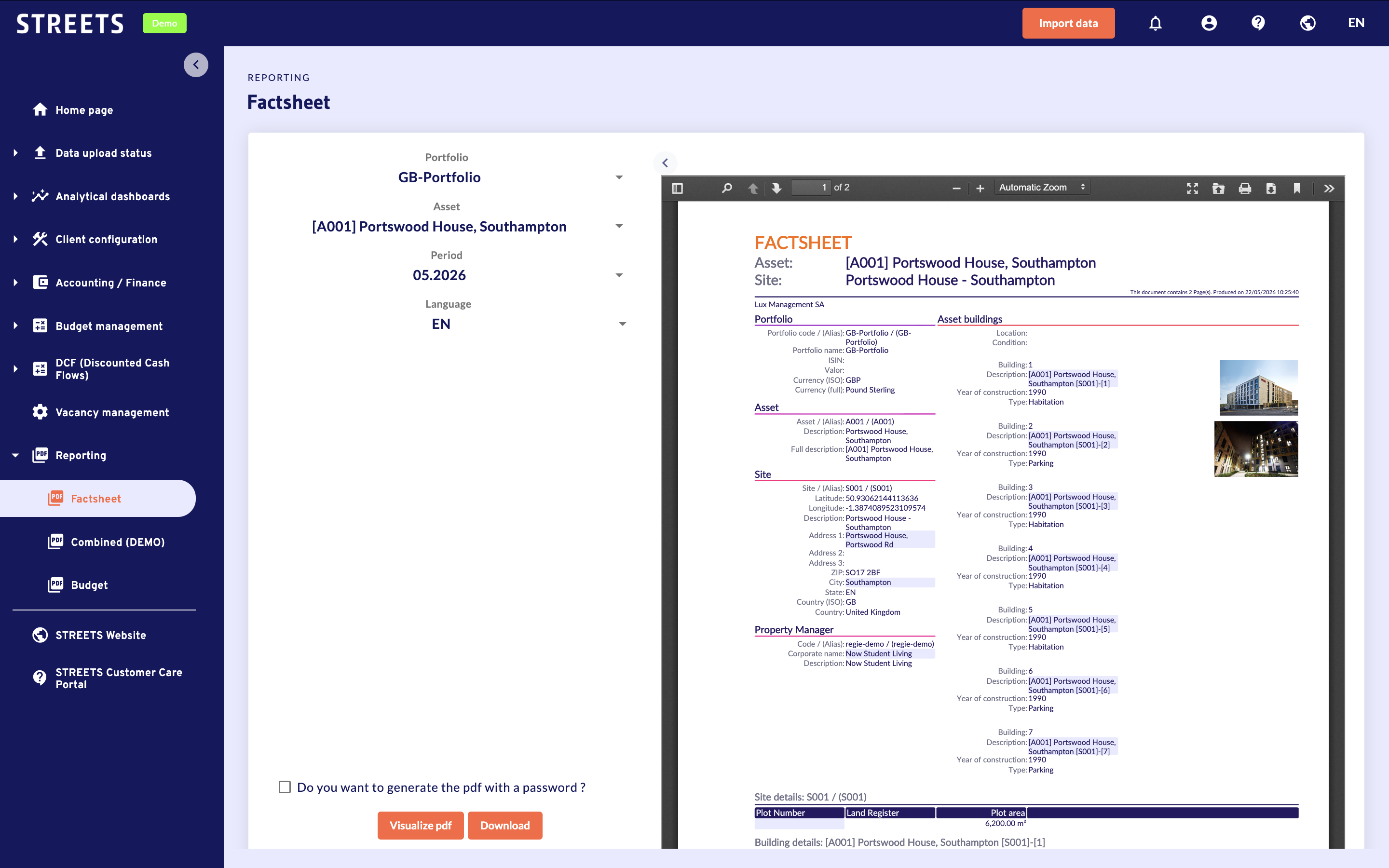
Board-ready reporting in three languages, at any time.
Generate fact sheets and reporting outputs in multiple languages. No manual preparation. No assembly required. Your data is already there — structured and ready for asset managers, lenders and stakeholders.
- Report formats compatible with FPRE and INREV standards (depending on client setup)
- Multilingual output: English, French, German from one dataset
- Traceable data changes and validation steps, with ongoing audit enhancements
- Reporting packs for asset managers and stakeholders
- Filterable dashboards with Excel and image exports
See all six modules in 30 minutes.
Book a demo and we'll walk through STREETS using a sample portfolio relevant to your asset class and structure.
Book a Demo